
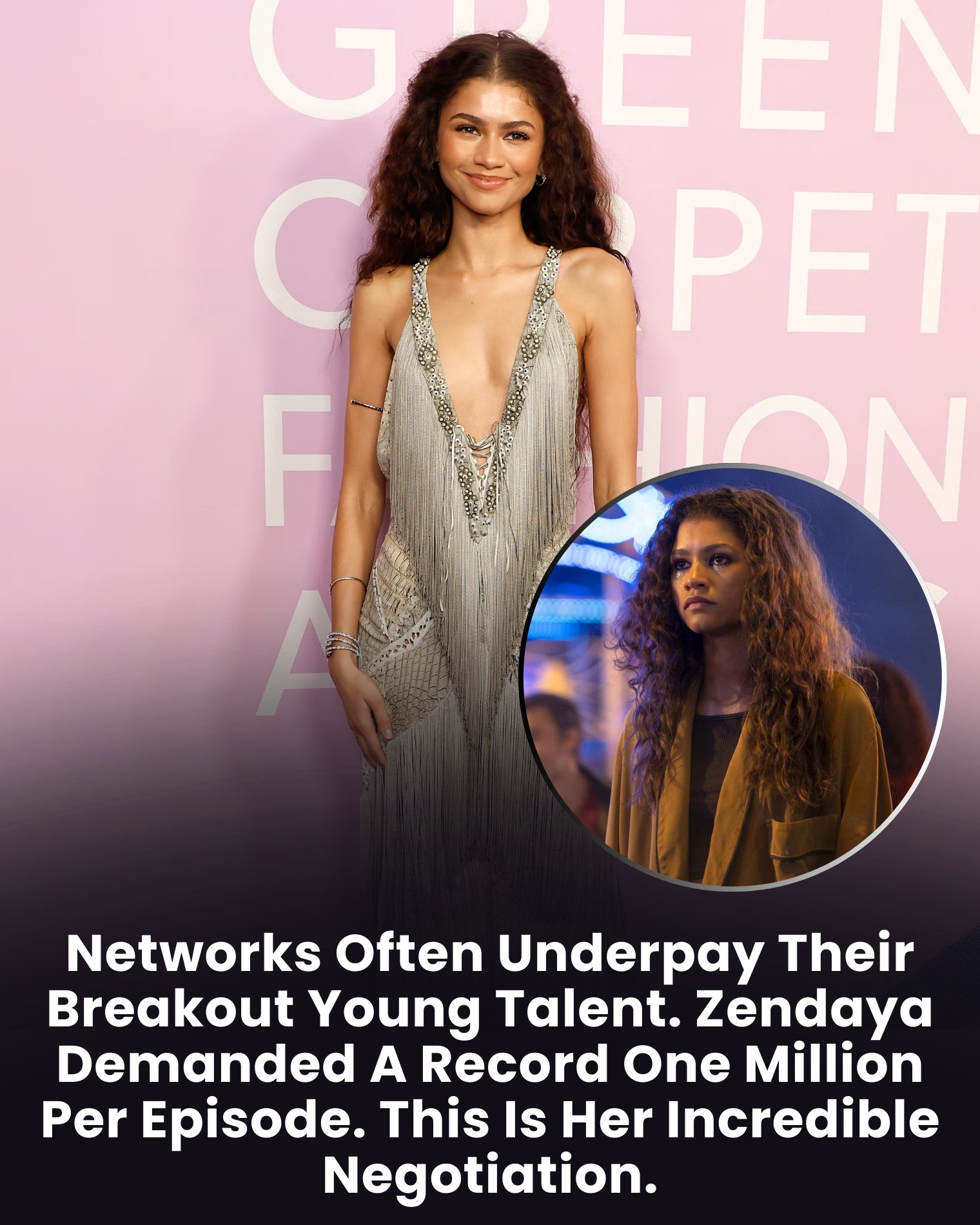
Zendaya's reported push for a $1 million-per-episode payday on Euphoria became one of the clearest signs yet that Hollywood's youngest elite stars are no longer willing to play by the old rules. While networks have often built billion-dollar cultural phenomena on the backs of breakout young talent, compensation has not always kept pace with influence. In Zendaya's case, that imbalance was never going to last.
By the time Euphoria had completed its first two seasons, Zendaya was no longer simply the lead actress of a hit HBO drama. She had become the face of the series, its emotional center, and arguably the single biggest reason the show maintained such intense cultural relevance between long production gaps. Her performance as Rue helped turn the series into a defining drama for a generation, while also earning her historic Emmy recognition. At the same time, her profile had expanded far beyond television through blockbuster films, fashion dominance, and global brand power.
That larger context is what makes her reported salary negotiation so significant. Reports around the show's delayed third season indicated that Zendaya was positioned to earn about $1 million per episode, a figure that would place her among the highest-paid television actors in her class and mark a major benchmark for a young actress leading a prestige drama. Although HBO has not publicly detailed her exact contract terms, the reported number itself reflects how much leverage she had entering negotiations.
Her leverage came from more than star appeal. Zendaya also held executive producer status, which strengthened her position inside the creative and business structure of the series. Reports in 2024 suggested she was actively giving notes on the direction of the new season, reinforcing the idea that she was not just hired talent but a major stakeholder in the future of the show.
That distinction matters. For years, young performers—especially women and performers of color—have often been treated as replaceable, even after proving they are essential to a show's identity. Zendaya's reported deal flips that script. Instead of accepting the traditional pattern of gradual raises and polite gratitude, she appears to have negotiated from a position of undeniable value. She understood that Euphoria without Rue would not carry the same weight, the same awards attention, or the same global anticipation.
The timing also amplified the power of the move. Euphoria season three was delayed multiple times, with HBO confirming in 2024 that the show was still moving forward and later reporting that filming would begin in early 2025. In a production environment shaped by rewrites, scheduling pressures, and heightened expectations, Zendaya's importance only became more obvious.
Whether viewed as a salary story or a larger industry statement, the message is the same: Zendaya recognized her worth and negotiated accordingly. If the reported figure stands, it is not just a personal win. It is a signal to the entire entertainment industry that the era of underpaying breakout young superstars is becoming harder to defend.