
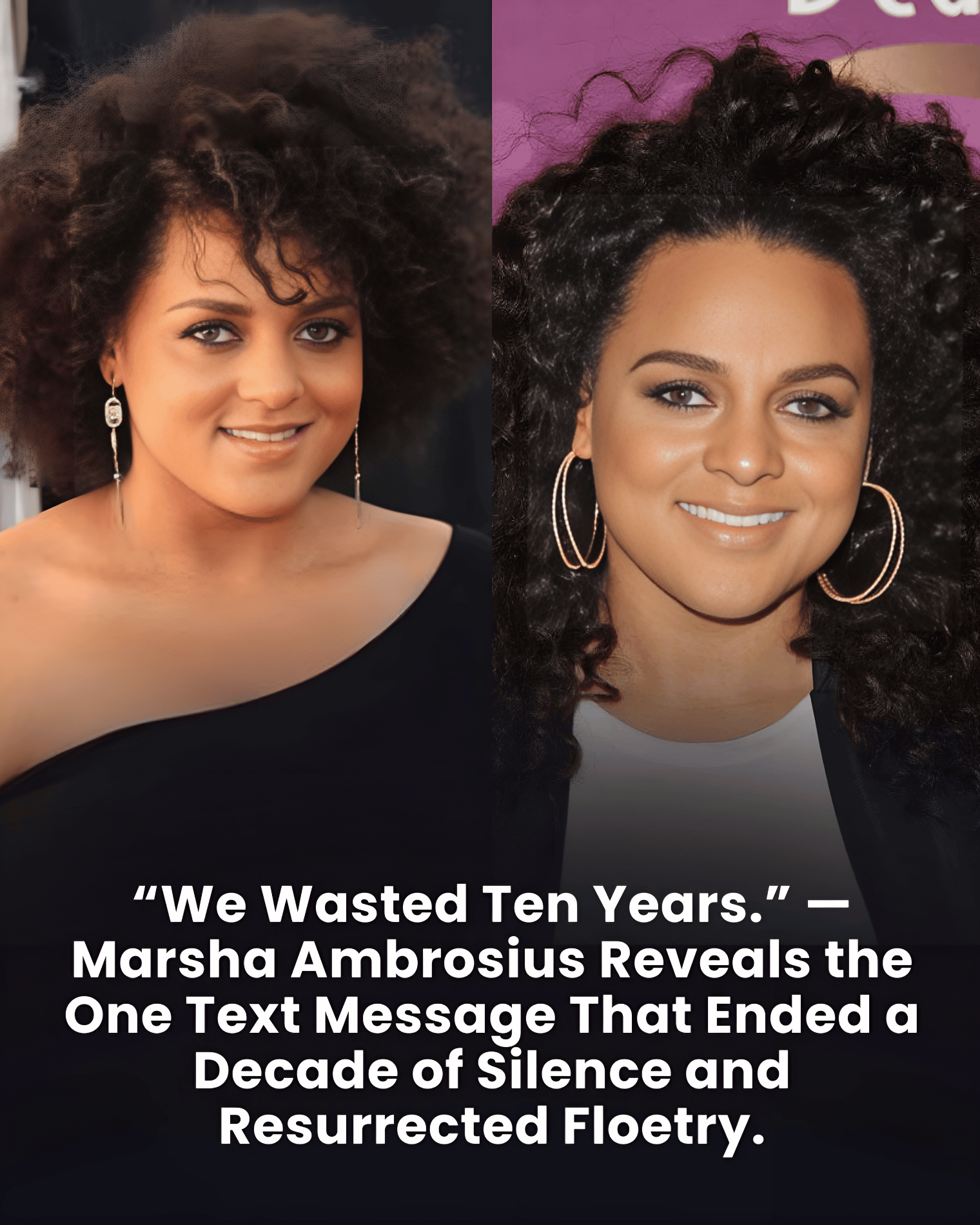
For nearly a decade, the silence between Marsha Ambrosius and Natalie "The Floacist" Stewart felt permanent. Interviews were icy. Social media was careful. And whenever the word "reunion" surfaced, it was usually followed by a polite but firm no.
Now, with the "Say Yes" tour officially launching April 9, 2026, in Newark, the duo's return feels almost surreal. Seventeen cities. Historic theaters. Sold-out presales. But behind the polished rollout lies something far more fragile than a tour itinerary: a friendship rebuilt from one three-word message.
According to insiders close to the pair, the reunion didn't begin in a boardroom. It began late one night in 2025 when Marsha sent a text that read simply: "Are we done?"
The Message That Broke the Silence
For years, both women publicly framed their split as "creative differences." Floetry had originally disbanded in 2007 after internal strain and label complications during the recording of Flo'Ology. Though they briefly reunited in 2015 for a tour, tensions resurfaced soon after, and by 2016 they were no longer speaking.
Marsha went on to build a formidable solo résumé, from Late Nights & Early Mornings to her 2024 jazz-infused Casablanco, executive produced by Dr. Dre. Meanwhile, Natalie continued evolving her spoken-word artistry under The Floacist moniker, cultivating a devoted niche following.
Outwardly, both women were thriving. Privately, something felt unresolved.
The late-2025 text reportedly led to an in-person meeting that neither expected to be easy. Sources describe tears. Long silences. And the painful realization that much of their decade-long distance had been amplified by management voices, competing narratives, and pride.
"We let them steal our sisterhood," Marsha allegedly confided to friends afterward. "That's on us."
Reclaiming the Neo-Soul Blueprint
In the early 2000s, Floetry weren't just another R&B act. They were architects of a moment. Their 2002 debut, Floetic, introduced the world to "floetic"—a seamless blend of live instrumentation, sensual poetry, and Marsha's velvet vocals.
Songs like "SupaStar" and "Say Yes" didn't chase radio trends; they became slow-burn classics. "Say Yes" in particular earned Grammy recognition and became a wedding staple for an entire generation of grown-and-sexy R&B fans.
Now, on the 2026 "Say Yes" tour—produced by the Black Promoters Collective—the duo will revisit that catalog on stages including The Met in Philadelphia and the Paramount Theatre in Oakland.
But those close to the tour insist this isn't nostalgia.
"It's closure," one production insider shared. "They're not recreating 2002. They're correcting 2016."
Lost Time, Found Perspective
The phrase reportedly repeated during rehearsals has been blunt: "We wasted ten years." Not in bitterness, but in reflection.
Both women entered their 40s during the hiatus. Both matured as solo artists. Both experienced industry highs and personal reckonings. And perhaps most importantly, both realized the brand was never bigger than the bond.
Marsha's experience working within major-label systems—particularly under Aftermath—reportedly gave her a clearer view of how business pressures can distort personal relationships. Natalie, who maintained a fiercely independent path, is said to have felt validated in protecting the spiritual core of the duo's identity.
Meeting in the middle required humility from both.
More Than a Reunion
The "Say Yes" tour is already drawing significant attention, bolstered by supporting appearances from Raheem DeVaughn and Teedra Moses. But ticket sales are only part of the story.
For longtime fans, Floetry's return feels restorative. Neo-soul, once defined by the early-2000s synergy of artists like Jill Scott and Musiq Soulchild, has long lacked the particular intimacy that Floetry embodied: romance without pretense, sensuality without spectacle.
The duo's chemistry was never about choreography or viral moments. It was about conversation.
And that's exactly what this reunion represents—a conversation resumed.
As Marsha reportedly told a friend after rehearsals wrapped last month: "We don't get the years back. But we get the stage back."
After ten years of silence, that might be enough.